Archive for the ‘Uncategorized’ Category

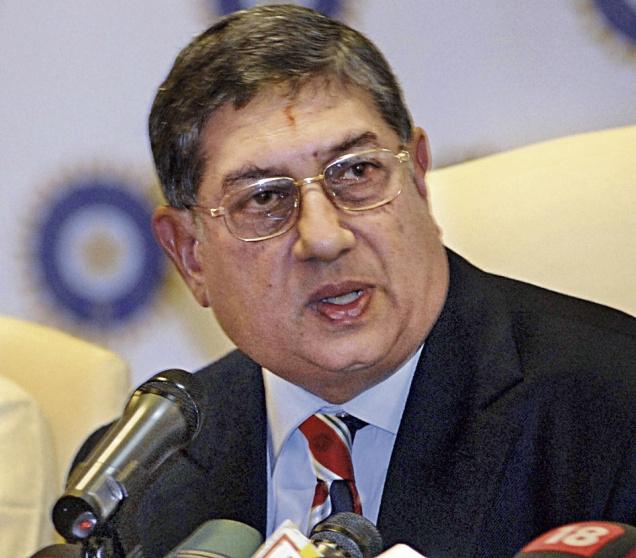
N. Srinivasan has called a press conference at 4 pm today, few hours before the IPL final. Everyone is perplexed as to the reason for this press conference, and the timing of it.

srinivasan
Is he going to announce his resignation? Is he going to spill all the beans finally? Is he going to share the news that his daughter has filed for divorce? So we asked the fly on the wall in the Srinivasan household, and this is what he had to share:
“There was a lot of deliberation in the Srinivasan household. Srinivasan and his supporters have been analysing the situation that has emerged in the last few days, in great detail. All the ire from people, media, politicians, bookies, underworld etc. have all been discussed at length, to figure out what the real challenge is about, and what should be done next.

After a lot of deliberation, it was determined and concluded that the main reason people felt let down was that the field was not a level playing one!
Guru’s calls went to Vindu and from Vindu, the information went only to a few select bookies. Those bookies and their customers benefited, while the rest of the people suffered due to not having the necessary information.

This was the great injustice that needed to be fixed (pun unintended). Like a company needs to make the necessary disclosures to the stock exchange, so that all shareholders and the public are equally aware, so also, if any facts are to be shared, these should be shared equally with all, and not selectively.

Recognising that to be the problem of the past, and wanting to ensure that this does not repeat for the final also, Mr. Srinivasan is taking this press conference at 4 pm, to share the information equally.

What the final composition of the CSK team will be? Who will open the batting, the bowling? What the roles of the umpires are going to be? How the pitch is? In which over, how many runs are expected to be conceded? Who’s going to drop some catches, who’s going to do crucial misfielding? And most importantly, who is going to win?

With all that clarified 3-4 hours before the game starts, it now becomes a level playing field, and everyone can place their bets with all this relevant information.

That way there will be no complaints anymore, and this controversy will die down.”

So said the fly on the wall.
So you know now, what to expect in the press conference at 4 pm today..

Newspaper headlines, TV debates and the scores of opinions on social media would have us believe that a country of a billion people was betrayed in one shot, yesterday!

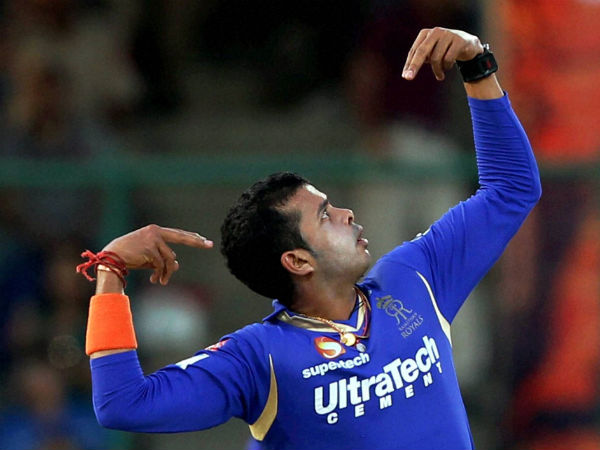
When the IPL Spot Fixing scam broke out, and 3 cricketers including one who had played for India earlier, were arrested, it has given the impression that God has fallen from His High pedestal. That it is a day of national grief, and cricket and India will never be the same again.

16-sreesanth

Calls of banning the cricketers for life, to having them arrested, to scrapping the current series of IPL, to holding BCCI and it’s officials accountable, to including the franchise owners to take blame, and many many more such demands have been doing the rounds.

Going against the tide, the way I see this episode is that, way too much is being made out of this incident. And I have many reasons to support this point of view of mine:

1. This is not an Olympic Sport. People are not playing for their country. This is a sporting event whose main aim is to ENTERTAIN. Especially when the 3-hour version of the sport has emerged, it has gone squarely into the sweet spot of entertainment, and actually competes with films and music shows and the like. To entertain people (in fact, film releases are delayed due to this competitive factor!).

So if this game is meant to entertain people and as long as it is doing so, why complain??


2. I have given this analogy before. I give it again.

When you go to see a film, and the story evolves, you sit there with bated breath, wondering “what will happen next”. The fact of course, is that the story has already been written, enacted and recorded. “Someone” already has decided what will happen next. Only YOU are discovering it for the first time. And you have enough intrigue and feel enough excitement, as it unfolds for you.

You don’t say that Aditya Chopra must be banned or Balaji Telefilms must be banned because they are showing us a story which they have pre-planned, and make us feel as if it is happening in real time!

If we are fine with films or television in terms of such entertainment, why not accept the same in T20 cricket too?


3. For many of us, there was an iconic moment in life, that evening of 1983, when Kapil Dev lifted the World Cup of cricket, at Lord’s.

We enjoyed the excitement, we enjoyed the victory.

What if a scam broke out today that revealed that bookies had paid Viv Richards to throw away his wicket and that led to India emerging victorious?!

For all of us who enjoyed the drama in real time, would it take away that pleasure which we felt in 1983??


4. So if we appreciate the brilliance of acting when Aamir Khan plays Rangeela or Amitabh plays Inspector Vijay, and we think of them as the character and find them believable, we can also admire a Sreesanth, who makes it appears that he’s actually bowling bad, and giving away runs.

I mean, if he also shows emotions of frustration when he gets hit, and appears believable, isn’t he doing as much of a good job as Aamir Khan or Amitabh, to entertain us?? What’s wrong with that??


5. Yes, it would become a sham if every catch was dropped and only lollipop balls were bowled, and the entire game became a festival match. THEN of course, the crowds will go away. But as long as some doses of drama are being injected, and appearance is maintained of a hard-fought game played with a key competitive spirit, what’s wrong with it??


6. For a moment, let’s take the conspiracy theory a step forward.

That more or less, the entire league has a concept of fixing. And the fixing is being done for purpose of maintaining a sense of excitement in the games and the league. Which then brings viewers coming back, and which also keeps the TRPs up, and the advertisers and the broadcasters happy.

Supposing this was done right through the league, and which is why, we had so many close finishes, and also that, till the very end, there is a certain openness about who will get into the last 4. And which in turns, ensures few dud games, and the TRPs are maintained.

This is easily conceivable.

So what, I say??

As long as we didn’t know about this, we were enjoying it completely. Everyone was happy – the cricketers, the spectators, the TV viewers, the advertisers, the broadcasters, the BCCI..

And now, say, we know that it was “fixed” to an extent.

So what has changed?

We are betrayed. We walk away from the game. Advertisers go away. The entire league comes under a challenge. And that helps whom??

From win-win to lose-lose??


Rest assured, I am not at all sarcastic here. I truly believe every word I have written here.

For all I know, and all I care, most professional sport may have small or high degree of fixing. But the role of those sports have always been to attract viewers and entertain them. And they are doing a good job of it.

Supposing there was no fixing, in the IPL. Everything was played fair and square. What if we got:

– Pune vs Punjab emerging as finalists, on merit. Where are the stars? How does this ensure viewership?

(just an example – nothing personal against Pune or Punjab!)

– teams scoring 120-130 in the first innings, and the team batting second folds up for 80 in 15 overs. How interesting would that be?

– within the first half of the league, the better teams have won enough to seal their place in the last four, and the others have got to a point where the knock out stage is beyond their reach? What excitement will be left in the balance games??


I believe that there have been elements of fixing in the game, for many years, and especially from the time that one of our erstwhile current experts, used to be a player! (the one who claims to have been “so shocked” by the happenings yesterday).

We did not know about most of those. It has all been a well-kept secret. Everybody is happy and spectators have been entertained.

Why break that comfort zone? Enjoy the sport, be entertained.

We’d rather watch this than watch some more saas-bahu stuff, and we’d rather ensure that IPL keeps the next Himmatwala type films from hitting the theatres!!

What do you say??


Lot of people are taking inspiration from the JPC.

Seeing the expeditious manner in which they complete investigations against fraud and scam from their very own group members, others have been motivated as well.

Why, they say, should they also go to police or regulatory bodies or the CBI or some ombudsman, when they can themselves investigate and settle matters out? Like the JPC so capably does.

So here are a few such committees being formed now..

  1. The Importers’ Association of India is forming the Joint Importers Committee (JIC) to investigate against any customs duties violations or possible smuggling in of goods, by fellow importers.
  2. The Stockbrokers Association of India is creating a Joint Brokers Committee (JBC) to investigate insider trading (who needs SEBI??)
  3. Sonography Practitioners of India are creating a Joint Sonography Team (JST) to investigate female foeticide complaints
  4. Manufacturers’ Association of India is starting a Joint Manufacturers Committee (JMC) to check on excise evasion frauds and complaints
  5. Chemical Industry Association of India decides to create a Joint Chemical Businesses Committee (JCBC) to check on environmental damage complaints of chemical factories.
  6. Al-Qaida and the Global Mafia Forum have created the Joint Terrorism Committee (JTC) to identify bombers and terrorists in any global terrorism activity

It is heard that many more are coming up in the same lines, indicating a generally high level of introspection by the human being, and identifying of faults within, thereby not requiring external forces to do so.

Meanwhile, in other news, the policemen’s union had an emergency meeting threatened as they were, by potential job loss if this trend were to continue..


I do represent a certain demography of a consumer. And while I may a little atypical in my spending habits, even for my own demography (I would like to believe that!), yet, I do have a certain “purchasing power” and I do buy brands and there will be brands wanting to reach me!

consumer

Now if you add the consumer market that my family also represents, in addition to my own, we would be a group that would interest several brands.

Then, as I share my media consumption pattern, this post should interest those brands who would like to reach out to us. I know, as a brand marketer myself, I would love to know similar traits for the consumers I am trying to reach for my client’s brands!

The thought to put this together came as I pondered over my vastly changed media consumption patterns. And I figured that if a brand was trying to reach me, they would have had to make a lot of changes over the years, to keep pace with my changes!

So here are my personal highlights:

  • I have stopped watching news on television for a few years. Not at all. None. Zilch. So brands, if you want to reach me, don’t waste advertising money there! 
  • I have stopped opening the tabloid, Mumbai Mirror (although it comes free) for more than a year, and for last 6- months, I have also not opened the Bombay Times, and saved myself time, and kept my sanity for a little longer
  • There was a time when I used to read the Times of India, nearly cover to cover. Not any more. Out of habit, I still pick it up. Days are when I spend 5-10 minutes on it, and there are days when I can do with 30 seconds of the paper. And no real difference, either ways.
  • In earlier days, when I would travel, I’d come back and catch up on the Mumbai edition of the Times of India. Even if it was an 8-day trip, I would diligently go over the papers, as a ritual. Now I never do this.
  • If I am in a rush in the morning, and I have not seen the paper, it does not matter now. In the whole day, I would not even realize that “hey, I have not read the paper today!”
  • Unless there is a VW speaking ad or something quite as astounding, I am completely blanked out to ads in the paper.
  • I certainly do NOT bother to look up the classifieds or the small ads. They may as well not be there. In fact, it helps me to see a page full of such ads. Enables me to quickly jump over that page, without a second lost.
  • I run through the pages of the Economic Times very quickly. Again, will not miss it, if I did not manage to see it some day. As it happens. On an average, there may be no more than 1-2 articles that hold even a small interest for me.
  • Time was when policy changes were very frequent, and one had to read the business papers lest one misses out on some important notifications. The same is not the case these days. On the one hand, there is a reasonable stability in policy, and on the other hand, we have a government that anyway does not do much 🙂
  • The Sunday Times supplement is a 3-second flip over for me.
  • The Corporate Dossier and the Brand Equity supplements with the Economic Times, on the other hand, do promise occasional value, and I may read through a bunch of content in those
  • That leaves the Mint. The weekday editions, like the Economic Times, do not mean much. A quick glance over is all that it merits.
  • But the Mint Lounge on Saturdays is still the one paper I do love. And I end up reading a good 50% of that content, typically.
  • Television programming consumption has not died yet, and I do have a few favorites that I still catch up on. However most of the TV viewing is via DVRs, as recorded programming. And then, I have a remote control in my hand, with a FF button on it. So ads are safely skipped. Also since a lot of the viewing is on HD TV, and there are few brand ads there (there are channel program ads a plenty – that’s how I’ve got sick of watching KBC ads, for example!) anyway.
  • The only live TV I might have watched, would be sports. But I cannot suffer cricket matches anymore, and while I keep in touch with the game to an extent, I do NOT watch live cricket games. Except for the rare Sunday game, when there may be nothing else going on in life. Which is rare, as rare can be!
  • On the streets and at airports waiting for flights, there are devices in the hand. In the car, usually on the back seat, the “office is almost on”. Yes, the laptop is open and work is happening. Which is why I do not fret the traffic much. It does not matter to me. I am working as always. So it can be the laptop, the iPad or the iPhone that keeps me busy (yes, “no time to stand and stare” and all that, unfortunately..) on the road, at airports etc. So the OOH advertising is again lost on me. Typically.
  • I detest telemarketers. I threaten them with dire consequences for calling me in spite of being on DND. I do not have the patience to even listen to their brief pitch. So telemarketing is lost on me. Don’t even try.
  • In spite of a lot of filters, some direct emails do penetrate into my inbox. If the creative is interesting and the message has some relevance to me, I may tolerate it and give it a glance. Recognise that few such emails come into my system, thanks to a reasonable anti-spam setting. And hence I am tolerant for those few. If there were large numbers coming in, I would have been harsher with them!
  • So where are my eyeballs and where is my interest? Yes, you guessed right. On the computer, on the Internet, and usually in social media space. Yes, my profession is partly a reason for this. But well, I am there now. So if you are a brand and looking for me, you know where to find me, most of the day. That does NOT mean that you spam me randomly on LinkedIn (I report a lot of spam on LinkedIn) or just dump advertising messages on me, as your Facebook posts, or @ me on Twitter with your brand junk. No, that will surely not work. But if you are subtle, give me value over this media, that can be bait for me!

So there, I have told you a lot about me. I am not sure if this is very unique to me, especially for my generation. I know many others who are losing patience with newspapers and recognise that most stories in the papers have an “agenda” and are typically planted! Many have also lost hope in TV News. But they have not deserted it yet. I keep reading cuss words for many of the news anchors on Twitter. I do not cuss them anymore because I have eliminated the Rajdeeps and the Barkhas and the Arnabs from my life. They don’t matter, in this busy life, they don’t deserve my precious minutes or attention.

you-don-t-know-me-t-shirt-vintage-t-shirt-review-cotton-factory-cotton-factory-3

And as for my family?

My daughters represent the “youth” that all brands seem to be going after.

They spend 10-15 seconds on Mumbai Mirror and Bombay Times every other day. They take a quick glance at page 1 of the Times of India – because it is there on the table. Don’t think they’ll miss any of these, if they stopped coming.

They do watch some TV, but it is always recorded. They have even less patience for advertising and are faster on the draw, to the FF button. They also see a lot of content on YouTube and Torrent downloads.

The only hope for brands in traditional media mood, is my wife. Yes, she does see TV News occasionally (I am not in the room) and does take a few minutes over the Times of India, Mumbai Mirror and Bombay Times. In fact, she recounts the odd interesting story from these, to me. And she does see and notice some of the ads there too. And shares details of some good offers, with me too.

But broadly speaking, if you are a brand, you will realize that your continuing spends on TV or print, are more of a waste, especially if you are trying to reach people like me. You really do need to think differently, you need to divert budgets into other places!

And should you continue to invest in traditional media, and traditional placement, and if you see dwindling returns, don’t tell me that I did not warn you?!!

I change my Facebook Display Picture, also known as the DP, every once in a while.

There is no system, no pattern, no specific period. Just when I feel like it. Perhaps when some new photos have been taken, and I find one of those interesting enough, to make it my DP.

Most times when a new DP is chosen and the update goes out, there are a few likes, a few comments, on that post.

A very typical reaction, that one.

However this time, it was different.

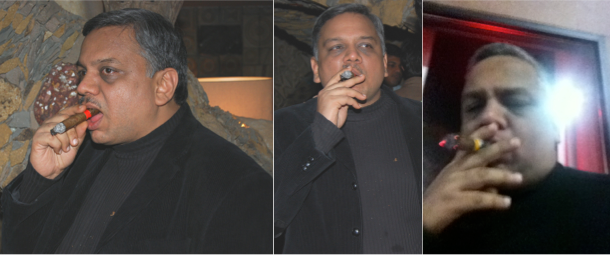
Few days after the Social Wavelength party recently, I put up one of my photos taken then, as my DP. This was the photo that I used:

The responses I got on putting this photo as my DP, were truly surprising.

While there were the usual likes and “nice pic” kind of comments, there were other stronger reactions.

One of my friends wrote: “Hate”

Another said “it was a bad ass photo”

I was told via a comment that “a person of my stature should not be endorsing smoking..”

Again, another said, “Bad message, Sir..”.

Besides the few comments on FB, there were three direct messages on FB suggesting that I should remove this pic.

And TWO SMS messages too!

And finally since Diwali was just following, there was a card that I got, where a dear relative also added her wish, that “may I give up smoking this year”.

BUT I DON’T SMOKE!!

Yes, I do smoke the cigar, perhaps 3-4 times a year. Okay, at most 6 times a year. But that’s it.

I don’t smoke cigarettes. And I smoke nothing else, the whole of the rest of the year.

So the reaction, on Facebook, via SMSes, and that card, were all surprising, to say the least.

It was not the first time that I have used a pic with a cigar on Facebook. There have been other photos in the past such as:

At no time in the past, have I got anywhere close to the kind of reactions that I got this time.

So I wondered about the possible reasons. What’s changed this time?

  1. Is it really about some kind of stature thing, and giving some kind of message?
  2. Is the anti-tobacco consciousness grown a lot more, and people are just a lot more verbal with their strong views, which they express now?
  3. To my smoking the odd cigar or to my putting up some kind of photos, I had always got reactions from my very close family in the past. But this time, it was beyond the close family. So I wonder if the regular exchange that we have on this medium, on various topics, makes a lot of us “feel” closer in terms of our relationships? Do we feel it to be okay to make some suggestions / comments to our friends, which earlier might have been a little more ‘personal’ type, in nature?
  4. Do these people just care for me a lot? All of those who said that the pic was not good, are very dear friends. And they are my well-wishers too. So it could easily have been their genuine caring for me, to want me to not indulge in habits of this kind.

I am not sure what was or were the reason(s) for the responses that I got.

I considered changing the DP quickly, on reading those responses. But I did not change it.

At one level, I do want to be free of the ‘responsibility’ that my actions need to be a “message” for others. I certainly want to live life on my terms, as much as possible. If I had taken off the pic immediately on seeing those reactions, I would have placed myself in the position of having to keep a certain appearance. Which is largely acceptable to others. But which I may NOT be.

I did not want to go there.

Just because social media makes us a little more visible (of course, to the extent that one desires oneself to become) does not mean that one’s every move needs to be subject to scrutiny.

For the record, I do NOT smoke all year / all day round, as I have clearly mentioned.

I do NOT believe smoking does any good to people. I am concerned about the number of people in our office who smoke a fair number of cigarettes daily. I am concerned for them, for their healths, for their future. I wish they’d start giving up the habit.

For now, I still retain the desire to have an occasional cigar, and indulge to that extent. I may choose to give it up some day. That day hasn’t arrived just yet..

Oh, and by the way, I HAVE changed the display picture now.. much after the reactions came!

Political parties are also large organisations and require management, as much as corporates do.

The Obama team is a classic example and would have all elements that make a corporate organisation, from management positions, IT teams, distribution networks, and what not.
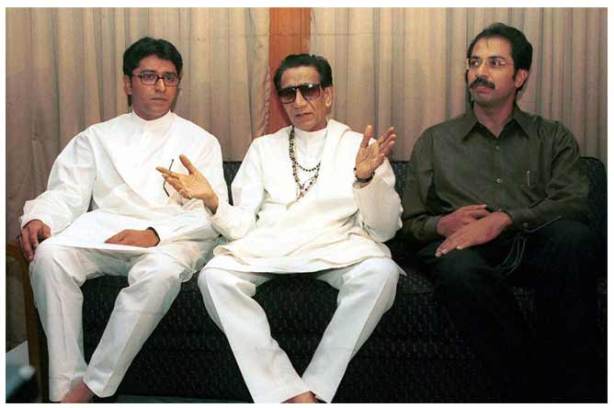
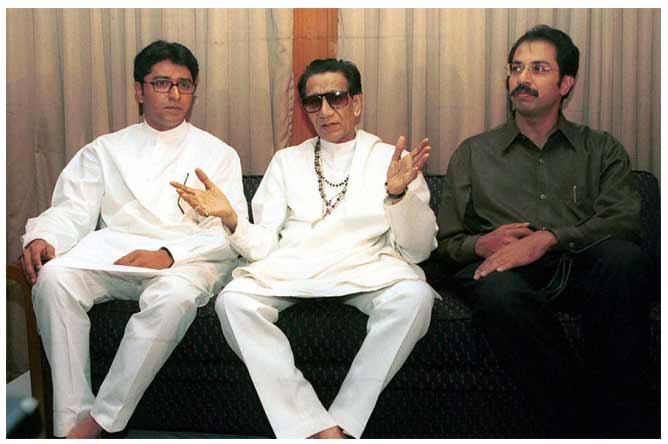
The recent events post the demise of Balasaheb Thackeray had brought into focus, some interesting management parallels:

1. Charismatic Leader vs Strong Organization: 

So we saw lakhs of people on the streets paying homage to the departed Balasaheb, and several more glued to the television screen.

Undoubtedly, the man had a massive support base, and the numbers tell the story.

And yet, there are questions asked about the future of the party after him?!

Very ironic.

The same party whose leader’s death generated such a massive response from the people, may have questions about its future, post his demise!

This is a classic case where an organisation needs to find the right balance between a charismatic and popular leader, while also building a strong base of the organisation itself.

Organisations do need good leaders. And these leaders also typically have a larger than life presence. Bill Gates, Richard Branson, Steve Jobs, etc. are all leaders of that kind.

Yet, Gates managed to pass the baton smoothly enough.

Questions were raised about Apple post-Jobs, but the company had enough inherent strength and a strong leadership team, that belied any doubts that may have existed in people’s minds, about the company.

In all these cases though, the outside world, while having seen a good leader, had also experienced the strong brand underneath.

Political parties have a slight difference. The leadership HAS to be even stronger than a corporate leader. It is on the strength of the leader, his oratory skills etc. that the party wins or loses elections. There is a very strong association of the leader to the brand of the party. Which is the case with the Sena at this time.

Sena = Balasaheb and Balasaheb = Sena has been the association, with the result that there are a lot of question marks amongst ordinary people, and perhaps the party cadre also, about the future of the party.

Which leads us to the point of succession planning.


2. Succession Planning:

Large organisations with huge stakes always worry about succession beyond the current leader. The boards of such companies realise the enormous stakes and usually have a plan in place, for succession.

If the leader is young enough, the plan may be a concept, but as the leader advances in age, and approaches a retirement level, then the plans get more specific.

The well planned identification of a successor to Ratan Tata, and then the year long transition with Ratan Tata being beside Mistry, is an excellent example of good succession planning.

Which sadly did not happen so well at the Sena.

Well, Uddhav has been leading the party for a while now, but for any kind of impact, be it at the Dusshera event or during elections, it was still Balasaheb who had to lead from the front. In a sense, as was his classic statement when the Sena was in power in Maharashtra, he still held the “remote control”.

I am sure Ratan Tata will hold no such remote control at the end of the year. Perhaps he has already put it aside! And that is where the difference lies.

Now this could have happened because Uddhav did not show strong leadership abilities? And had to depend on Balasheb’s presence to make any impact to the masses and to the cadre.

If that was the case, and if ultimately the organisation was bigger than the individual, there should have been boldness to bring in a better leader! But transition to the new leadership was a must!

Not that Balasaheb passed away suddenly. There was time enough to plan this well.

But then again, unlike pure professional companies, when it is a family owned / run company, it is not always the best interests of the company that impact decisions, rather, it is the best interests of the family. And sometimes these best interests may not be so right for the organisation concerned.

Such challenges have been seen in companies, and it is certainly no surprise that the same are seen here in a political party.

Then again, there are family run enterprises in India who think bigger and bolder today, and do bring in professional management, and realise that the organisation is a bigger asset and they must do what they can, to ensure its continuity and continuing growth. Those families who make this transition for their companies, have managed to sustain long term growth.

Others have seen the decline, usually by the time the second or third generation of the family takes control of the companies (there will be the rare exceptions to this).

If the Sena could have also thought about going beyond the immediate family, the future might have looked more secure.


3. Insecure to give us the throne too early?

Today’s political parties in a sense, resemble the erstwhile kingdoms in India.

And there have been many moments in history, when the prince has usurped the throne from his father, the king, or even put the king behind bars, or even had him killed.

Just to get the throne.

Sibling rivalries were even more common.

Political parties are not too different.

Would a leader worry that if he hands over the reins too early, he will be relegated to a life without importance, without power, without clout?? Does that make even an old leader to keep his hold on his seat of power, and not make way for the successor?

We have seen such incidents even in the corporate world. Apollo Tyres is an example that comes to mind.

It is a rare individual who having enjoyed tremendous clout and power, is able to move away, into a life of relative calm and away from it all. Perhaps the need is to find another purpose, a different passion.

Bill Gates comes to mind. His passion for his current goals ensures that he doesn’t miss the seat of power which was the Microsoft Chair.

4. Branding sticks!!

When we work with brands, and sometimes see the extreme finickiness that some brand managers display about their brands, we may wonder why so.

But over time one realises that brands are built over long years, and once a brand it built, that perception sticks. Usually for long, long time!

If a particular telecom company gets slotted as a cheap and poor service company, it is extremely hard to get that impression out, no matter what it does.

Yes, brand reputations stick for long.

Which is why we are seeing the strong anti-Thackeray and anti-Sena emotional outpour.

The smallest incident of unrest in the city, at this time, and people are ready to condemn the Sena. Whether the incident was doctored by the Sena leadership or some local goons, it does not matter.

NRIs from far and wide recollect the violent incidents that they had experienced when they were in India, many years back, and that is the perception they carry about the Sena.

So it does not matter now, if the Sena leadership had instructed their cadre to stay calm and peaceful, and largely the peace was managed. Their past, their reputation, hounds them. And can’t be shirked off.

So there will still be many fingers pointing at the Sena, even if it was proven than non-Sena people had done some damage, that will not be believed, and the Sena will get the blame.

Yes, a brand’s reputation becomes its legacy. Can’t get it off easily.

The same is true for corporate brands. Which is why I appreciate more now, the obsession that some brands display, on getting all communication just right, from their brand’s point of view.

It is important that the right brand perception is created and maintained too.

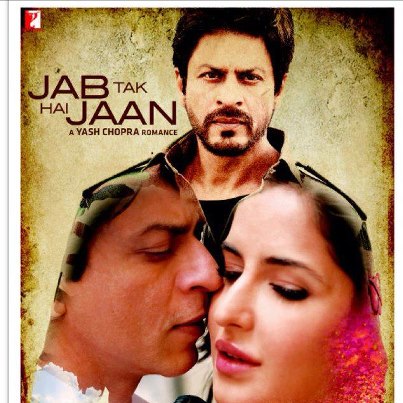
If you are a fan of Hindi films, just watch Jab Tak Hain Jaan (JTHJ) for the beautiful tribute to Yash Chopra, at the end. For the wonderful entertainment that he provided to us, all these years, the excellent 3-4 minute salutation (almost certainly, an Aditya Chopra piece of work) with the titles at the end, was very touching.

There are other reasons to see this film too, though many of those connect back to the man himself, Yash Chopra.

1. Yash Chopra uses the camera like a pen, and creates poetry out of the sheer brilliance of the camera. And this is not just the superb locations that he has caught on camera or the near perfect sets, but also the emotions that he captures from the actors, just via his camera.

2. Beautiful sites of Ladakh revisited in a film again, the countryside of UK, made for great viewing on the screen.

3. Gulzar for lyrics and A R Rahman’s music. Two of the best proponents of their respective trades contributing to the beauty of the film. On their own merits, and without any other support, these two giants would lead a movie to great heights. Here of course, they are a part of a large canvass.

4. For a change, Shah Rukh Khan does not overact. In fact, he acts “just right”. The intensity of his face, the underplay of his emotions, serves his character really well. Thank God for the absence of his hee-haw way of talking (or is that reserved only for Karan Johar films – either ways, thank God!). I am sure Yash Chopra had a role to play in bringing out the best from SRK.

5. Anushka’s role could have easily have been a two-bit extra kind. But the spunky girl that she is, she makes the most of the opportunity and turns the role into a substantial one. Comes out strong and significant.

6. Katrina looks good. Period. 🙂

7. After Zindagi Na Milegi Dobara, once more Katrina is shown on a two wheeler with a helmet on, and then getting more to her lips than the Slice mango drink, viz. another lip lock scene, this one with SRK, of course. After ZNMD, directors who cast her, may make this a habit, and she could soon challenge Emran Hashmi for being most kissed star?! #JustSaying #NotThatIMind

8. The trench coats. Burberry, I presume. The bike rides in the mountains. Looks majestic.

9. Aditya Chopra’s poetry and dialogues. Some good lines through the movie.

10. Katrina looks good. Did I already say that earlier?

So is it all good? Not really. There are some misses, and some questions, and some general observations:

1. Not much of  a story. A bit far fetched. But the glitz covers up for this.

2. Are there really so many bombs needed to be diffused all the time? And while the one guys playing with death can walk into it, unprotected, do the other folks around him have to be equally casual??

3. Does a foreign country policeman allow a brown faced Indian to casually walk in, claim himself to be an Indian Army person (no checks) and attempt to diffuse a bomb? It’s like on a flight, someone falls sick, and they call out, “is there a doctor on the plane?” – don’t think they’d do that for bombs, “is there a bomb diffuser around here?”!!

4. The second time in a Yash Chopra film that someone bought birthday gifts year after year, but did not give them to the child. Saved them till later, with letters, and the person ended up getting them all together, years later. Lamhe and now, JTHJ. No new ideas around this, Yashji?

5. The film was looong. At least in our theatre. Perhaps because of a long interval too, with lots and lots of ads running in the break. Took nearly 4 hours by the time we were done and out. The film could do with a tighter edit too. Cut 15 min off at least.

6. What’s this obsession for moms to give their wedding wear for their daughters to wear?? Don’t they realize that: a) 25 years is a long time for that dress to be totally out of fashion and b) don’t you feel for the fashion boutiques who will go out of business, if this trend continues and becomes popular?! 🙂

7. The other characters in the film, like SRK’s cronies in the army and in UK, Anupam Kher, and all others, have pretty much, no role. Those characters are just not developed. Seems like a waste.

Outside of the film, noticed that advertisers are back with in-theatre advertising. For the multiplexes having rare full houses, the additional income from other sources, including advertising, builds sustenance.

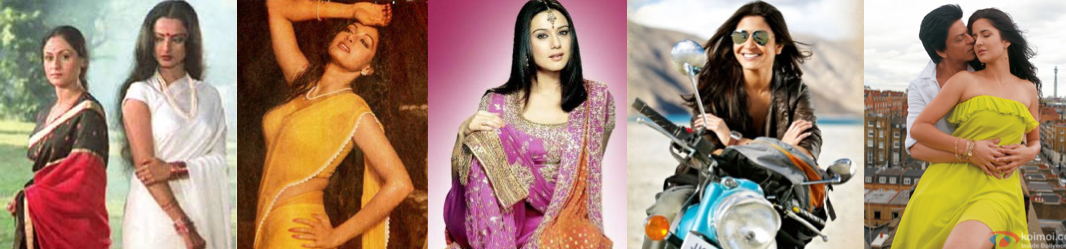
A closing word on Yash Chopra. Where other directors of earlier times seem to have lost their connect with the new audience, Yash Chopra continued to evolve himself, kept pace with the changing generations, and kept making his films look good for the times. He made his heroines look good, with the best fashion of the times, even as he evolved from silk and chiffon sarees to bright and colourful short dresses.

It is a very interesting phenomenon that one observes. Especially in times of social media and self expression and where everyone’s a publisher.

That there is a reasonably strong feel amongst the educated Indians, that corruption is not good for the country and that politicians and others who are resorting to these means, must be punished.

But when there are efforts from _someone_  or _anyone_ to do something about this menace, there are objections raised.

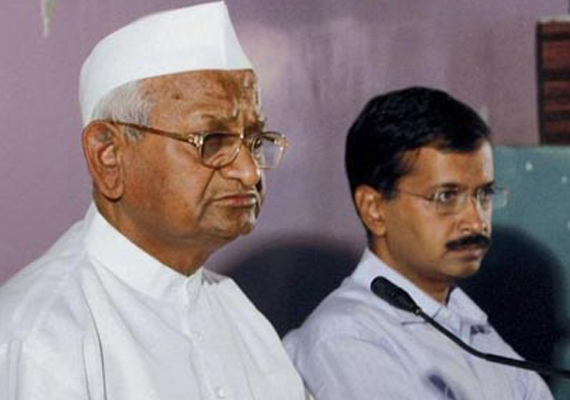
It happened when Anna Hazare protested. It is happening now even as Arvind Kejriwal exposes one scam after another.

There is a disagreement on the methods being adopted.

And hence a disagreement with the individual concerned.

There was a list of people who contributed to Kejriwal’s organisation, which was published.

And no sooner was that done, there were a fair bit of disclaimers and denials that came out from the people named therein.

Because they did not want to be associated with the means that Kejriwal was adopting.

Besides those few whose names came out as contributors to Kejriwal, many others all over Twitter and Facebook also found objections to his means (like they’d found in Anna Hazare too).

Arm chair activism in full flow. With strong arguments as well.

So cool.. this is how it is:

“Yes, I am sitting in my arm chair.

Yes, I dislike corruption.

Yes, I hate those reports about large sized scams, politicians and other heavyweights getting away scot free.

Yes, I wish there was a solution.

Yes, I am happy that someone is making some noise and trying to do something about it.

But hey.. No, I don’t agree with THAT particular thing that he just said or did.

No, I disagree with the methods he ia adopting. ”

—–

So where does that leave us??

Do you have another plan? Do you think sitting in your armchair and wishing for that perfect solution will make it happen?

Do you even have a paper concept of that perfect solution??

Do you know what it takes??

Guess not!

And yet, you will keep finding faults when someone is doing something.

So I take it that you don’t really care about the problem as much. And you are fine with the fact that we are becoming an increasingly corrupt society, and our children will not be able to make any headway in life, without needing to pay their way through.

You are willing to accept that reality for tomorrow.

Is it?? Or is it not?

If not, then what are you really doing about it, except for finding faults with someone who is making an attempt?

Are you are part of the solution or a part of the problem?? 

The simple fact is that:

a. Someone is attempting to take the fight against corruption

b. He has his set of convictions and he is following those, both in intent and in effort

c. He is out there, walking his talk

d. You can agree with his broad convictions and integrity, and may not agree with everything that he does

e. That’s fine. Once you contribute (time, money, support) to a broad cause, stay with that. Does not matter if some of the means are not the perfect ones that you’d have liked to be adopted.

f. If you do not agree and cannot support, and would like things to happen in a certain way, what choice do you have? Heck, go out and do it yourself. Become an activist and walk YOUR talk.

g. Because there is no other way. This is NOT Burger King. You CAN’T have it your way otherwise!! You cannot order “a custom-made NGO that will do exactly what I want it to do” or “a new political party that will obey my every command”.


I know that I am unable to be on the street, fighting the corruption war, in a way that I would like to. So I am happy with an Anna Hazare or an Arvind Kejriwal who are doing their part. I will support them, and wish them the best. Even if I find an odd objection in their methods.

And this other absurd expectation that people have. That you should be spotlessly clean before you raise a finger against the politician for being corrupt. What nonsense that is?? I could be trapped in a system or I might have not had the courage to stand up against corruption so far. That does not mean that I don’t have or can’t have a desire to live in a corruption free society!!

I did not go to check if Dale Carnegie truly knew how to make friends and influence people. In fact, I don’t know if he had any friends at all. I didn’t care. I liked the material in his book and that was enough for me.

Likewise, if Kejriwal and his team have good material, I will support them. Not check if there is an odd old skeleton of sorts, in some of their cupboards’!!

What do you think?

Vienna Musings

Posted: October 13, 2012 in Uncategorized
Tags: , , ,

Over the years, work and business has taken me to different places.

In early days of my career, I started out on sales calls locally, then to nearby places like Pune, gradually to Gujarat, and then to other parts of the country. There were contrasts to be studied at each new place, in terms of culture, behaviour, priorities, etc.

Export and import activities in my family business took me to Singapore and South East Asia few times, and then once we embarked on the Homeindia.com story, US became a regular port of call.

When you look at things from a distance, you can club some places (and their people) into thematic groups. So Mumbai is one, most of second tier India may be grouped into another, S E Asia is different, and then US/Canada are different. The actual city or place aside, there are many similarities within a group.

This recent visit to Vienna, in that sense, introduced me to a different genre of place and people. Although a part of Western Europe, and having its similarities to an extent with the “western” world, I’d say, Vienna is different from the US. A lot.

Some pointers – Austria’s just about 8 mn in population, Vienna is 1.6 mn. A total of around 1 mn on Facebook, for the country. Twitter’s not hot yet. When you see directions from the city, to places like Bratislava and Budapest, when companies get their work outsourced to nearby Croatia or Romania, when companies do business in Georgia (the country, not the US state) and Turkey, it is clearly a different land.

Overall, Vienna’s a place full of history, from the great emperors of yore, to the World Wars, of palaces and gardens, of awesome old buildings, of churches and of coffee houses. Also of the great huge Vienna woods, of peace and quiet (no security outside the chancellor and President’s residences; the President drives to work on his own; saw the Mayor exiting out of a coffee house, just as we entered – no fan fare, no gun totting security men!), of a strong German influence, of innovation, of music, art and culture (museums galore, huge tradition of Mozart, Beethoven and the rest).

A couple of really interesting initiatives that I noticed..

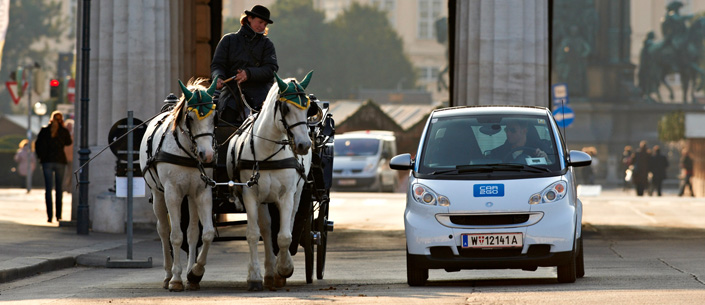
1. The Car2Go concept: There are 500 smart cars under the Car2Go concept, all over Vienna. One joins the service and gets a smart card, that can open the door to any of these smart cars. When one wants to use the car, through a mobile app, one can locate the nearest parked vehicle. Go there, enter the car, the keys are inside, drive to where you want to go, and then park it safely, leave the keys inside, walk out and leave! That’s it.

You are clocked for the minutes of usage, and charged accordingly.

2. Handy parken – street parking made simple via mobile app: You go park somewhere on the street. You use your phone app and register the parking there, and pay for a few minutes. You get delayed in your meeting, from the same app, you register and add minutes. When a cop comes and wants to check if you have paid for parking, he uses the phone app, and checks for your car number.

Amazing, isn’t it?

Great application idea..

Speaking of amazing ideas, at the conference that I was speaking at, the only other English language speech was by the person talking about the Live Singapore project, which is an alliance of Singapore and MIT.

It was absolutely mind boggling. They are picking up the amazing amount of digital trail that we leave, to map and understand a whole bunch of things, e.g. mapping the presence of people (as understood by mobile location signals) and mapping the public transport system together, they are able to see where people are concentrated, and if public transport is planned to meet those people needs. Likewise they are able to see electricity consumption patterns mapped with rise in temperature, movement into and out of the city, changes that happen during large events (e.g. F1), etc.

Check this video – it is awe inspiring, and gives us a taste of the future:

Yes, all in all, it was an interesting 4-5 days in Vienna..

🙂

Read a very interesting piece in the Mint Lounge, by Niranjan Rajadhyaksha, referring to some people beyond the realm of politics and Bollywood and cricket, who have been hugely impactful in making India what it is today!

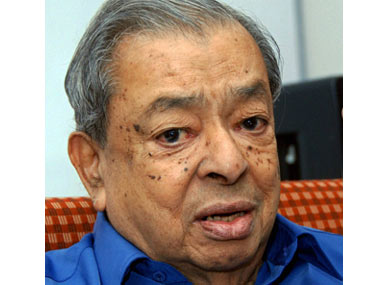
One of the persons he talks about, and about whom I had also written a bit few days back, is Verghese Kurien, the man behind India’s white revolution, and self-sufficiency in milk, farmer empowerment, etc.

As Rajadhyaksha puts it really well, “There are three ways to judge the impact a person has on his times: the number of lives he touched through his work, the strength of the institution he built, and the team he left behind to carry on the chosen task.”

And even as we feel good about the little we may be doing in life, when you consider these benchmarks, we would realize that we are nowhere. While it is very tough to rise on all of these aspects, we can attempt to do our best in touching more live, creating a strong institution, and leave a strong and empowered team when we choose to move on.

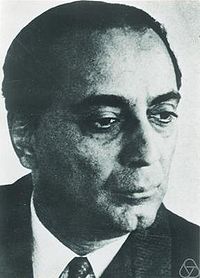
Institution building is not something that only happened in the early years post-independence. While Rajadhyaksha talks about personalities like Kurien, Homi Bhabha and Vikram Sarabhai, it is interesting to see him list current day personalities also, such as E. Sreedharan, the man behind Konkan Railway and Delhi Metro, or R. H. Patil, the force behind the National Stock Exchange.

But it is also a fact that being an institution builder is an attitude that is not commonplace. Can you look at a 20 years horizon? Or you are worried that you don’t know what will happen 3 years from now, and hence think in the short term? I remember vividly, an old gardener, at a nursery in Coorg, where he was painstakingly, but lovingly, putting together, the saplings that would go out to create trees. And on the outside of the nursefy, I saw the humungous trees that would have come up in 20-30 years. Clearly, the gardener may not see the saplings flourish into those large trees, but that did not deter him from putting his most into the effort, and lovingly too.

The institution builder thinks of a bigger picture, the grand vision. And that’s what makes a Vikram Sarabhai or a Homi Bhabha.

Interesting words from M.G.K. Menon, who succeeded Bhabha as director of the Tata Institute of Fundamental Research, about Bhabha: “The legacies he left behind are not only the tangible programmes, buildings, equipment, gardens and the like, visible creations of his scientific and artistic abilities; but even more important is the legacy which is in some sense intangible—the large number of trained personnel, who have embraced the vision of a new India and who have acquired confidence in their own abilities. (Patrick Maynard Stuart) Blackett has often stated that a first-rate laboratory is one in which mediocre scientists can produce outstanding work. Homi Bhabha … understood this well and this is what he sought to create by the right environment and the right conditions of work.”

When we think of the nuclear program we have in place today and the strides that we have made as a country, the paragraph above brings the goosebumps. Imagining those days when he must have struggled to get the program going, and kept going forth relentlessly, so that we can see his legacy now.. how awesome!

Towards the end of his piece, Rajadhyaksha asks very pertinent questions. Are history books today filled with freedom fighters and (worse) other politicians, or even perhaps, sports personalities or iconic film stars, but do not have a mention of some of these great men and women, who built the real India?

Will the young generation have the understanding of who built the India that they now enjoy and take for granted? Isn’t it the duty of today’s generation to acknowledge these deeds?

Also are there any in our society today, who can be considered such institution builders? Are we encouraging them enough? There is still a lot to do, and we need today’s Bhabhas and Kuriens and Sarabhais..